We found kānuka had stronger roots than poplar and tōtara at two Auckland sites
Blog post.
Tom Mackay-Smith and Raphael Spiekermann
11/26/20252 min read
Over the past five months, we’ve been working with Auckland Regional Council on a study comparing the root systems of kānuka, poplar, and tōtara on two soil types in Auckland hill country.
The research looks at two key aspects:
How far the roots spread out from each tree (root distribution).
How strong the roots are when pulled from the soil until they break (root tensile strength).
We’ve now finished collecting all the data and are starting to analyse the results.
To keep things simple, we’ll share the findings across two newsletters — starting with root strength in this issue, followed by root distribution next time.
Root Strength
To measure root strength, we attached a load cell (a sensor that measures force) to individual roots. Each root was then gently pulled until it broke, while a data logger recorded the exact force required to snap it.
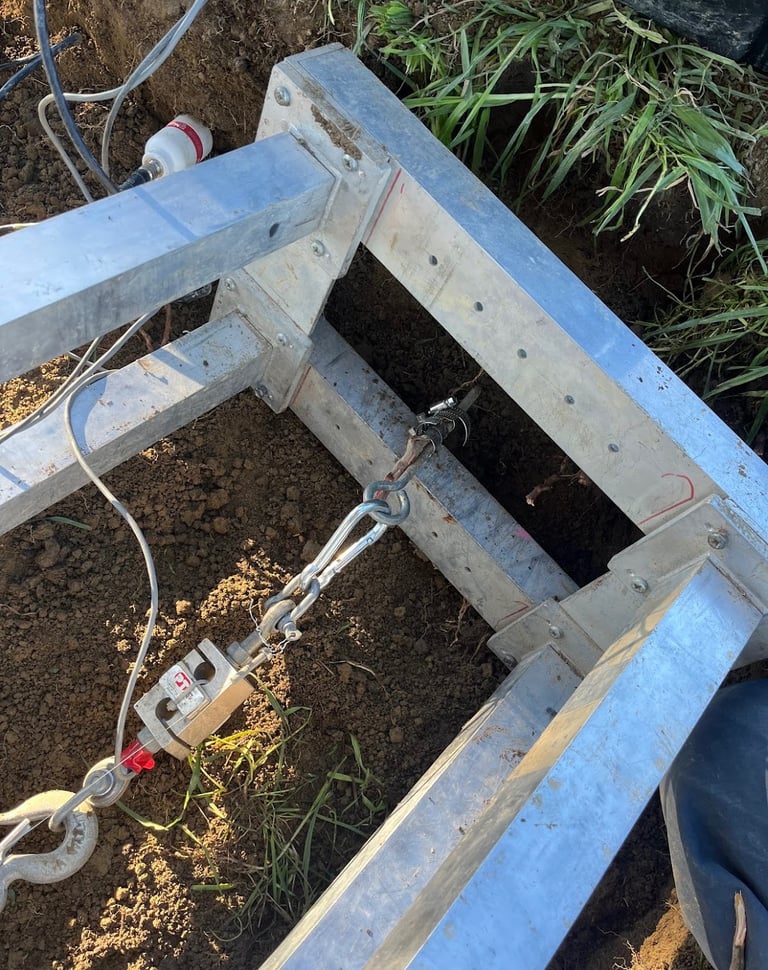
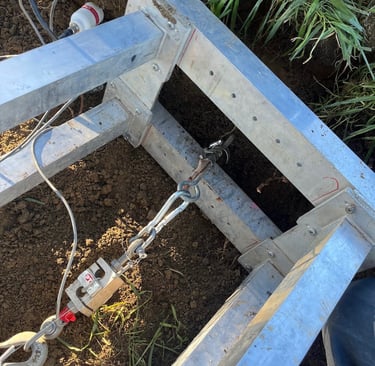
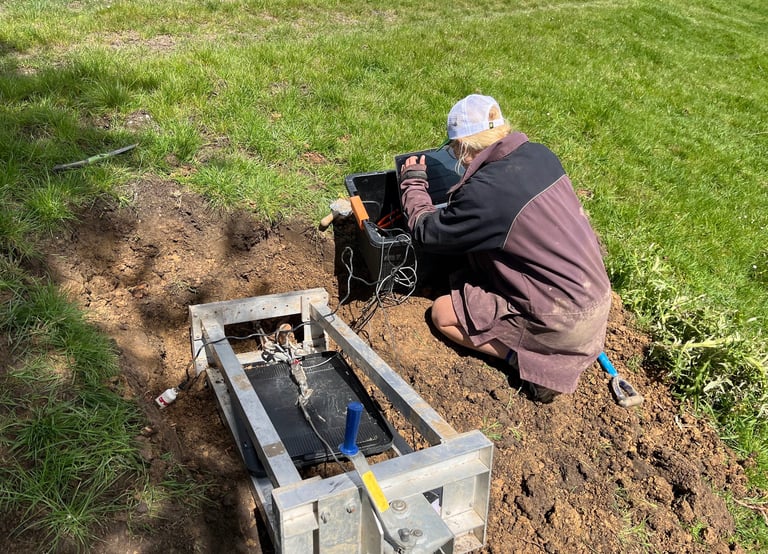
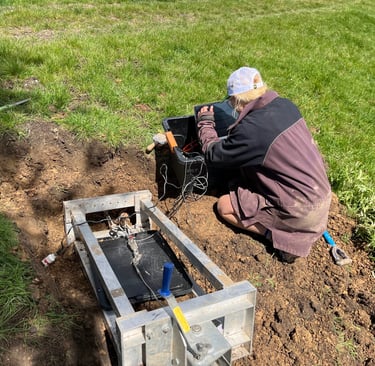
The table below shows the average breaking force and maximum force measured for kānuka, poplar and tōtara at two soil types. Similar root diameters were sampled for each species.
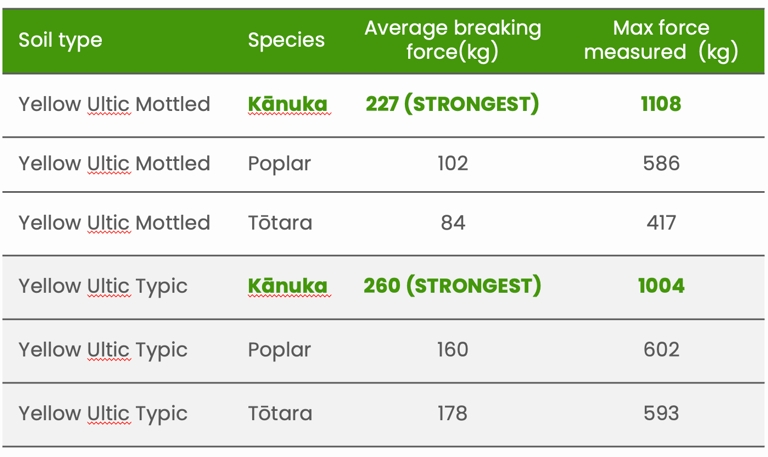

Across both the Yellow Ultic soils, kānuka roots were between 45% and 170% stronger than those of poplar or tōtara.
Statistical analysis confirmed that kānuka roots were significantly stronger than poplar or tōtara, even after accounting for root diameter.
Photos of the month
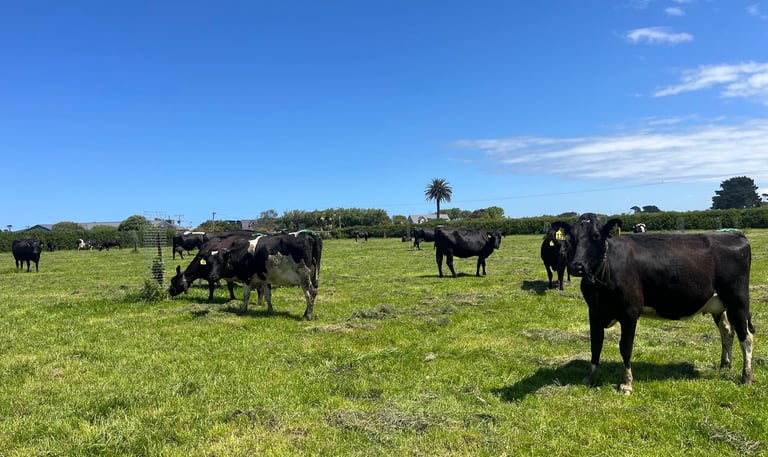
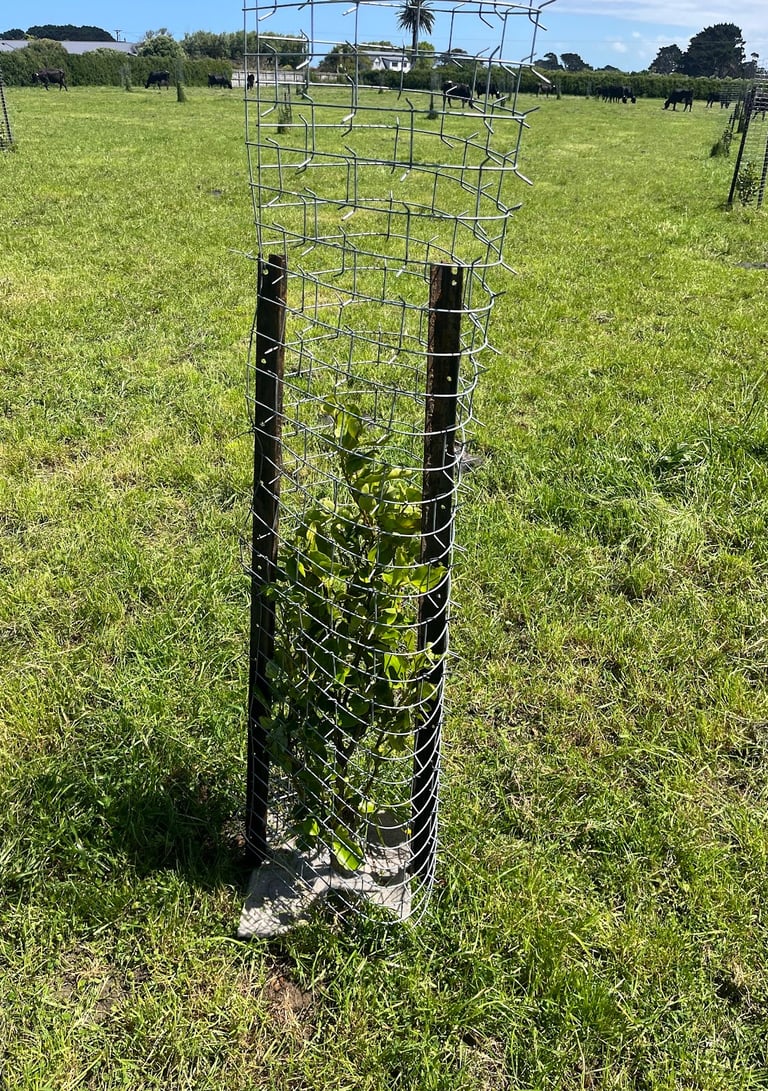
Some photos from our Dairy Trust Taranaki trial site near Hāwera, where their team replaced our earlier failed guards with Cactus guards. The broadleafs (Griselinia littoralis) are doing especially well here.